Can AI Agents Build 3D Models in Fusion 360?
A deep dive into using Claude Code via MCP and the Autodesk Assistant Agent to automate precision 3D CAD modeling.
The Challenge: Building a Precision Spur Gear
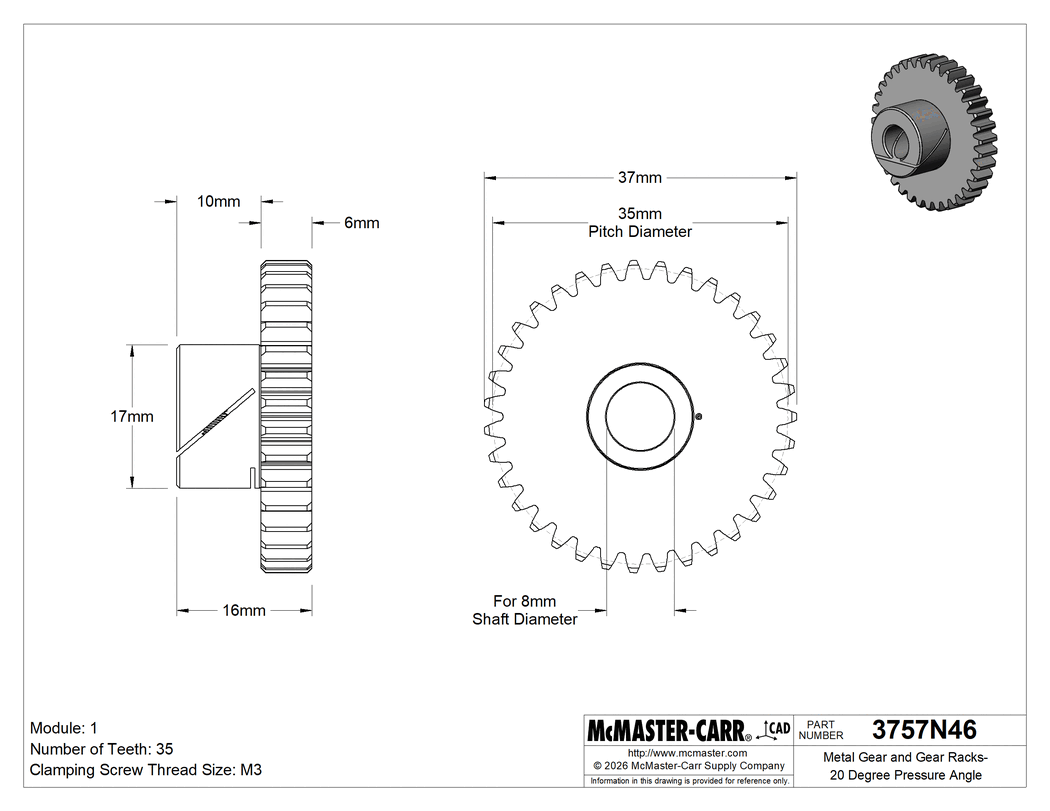
In my latest experiment, I set out to build a precision 3D spur gear body in Fusion 360 using purely AI-driven automation. I selected the McMaster-Carr 3757N46, a metric spur gear with 35 teeth, a module of 1, and a 20° pressure angle.
The goal was to have the AI write and execute a Python script via the Fusion 360 Python API to construct the gear programmatically, taking care of involute profiles, extrusions, bore cuts, and clamping slits without manual human intervention.
See the Process in Action
The Workflow & Results
1. Approach 1: Claude Code via MCP
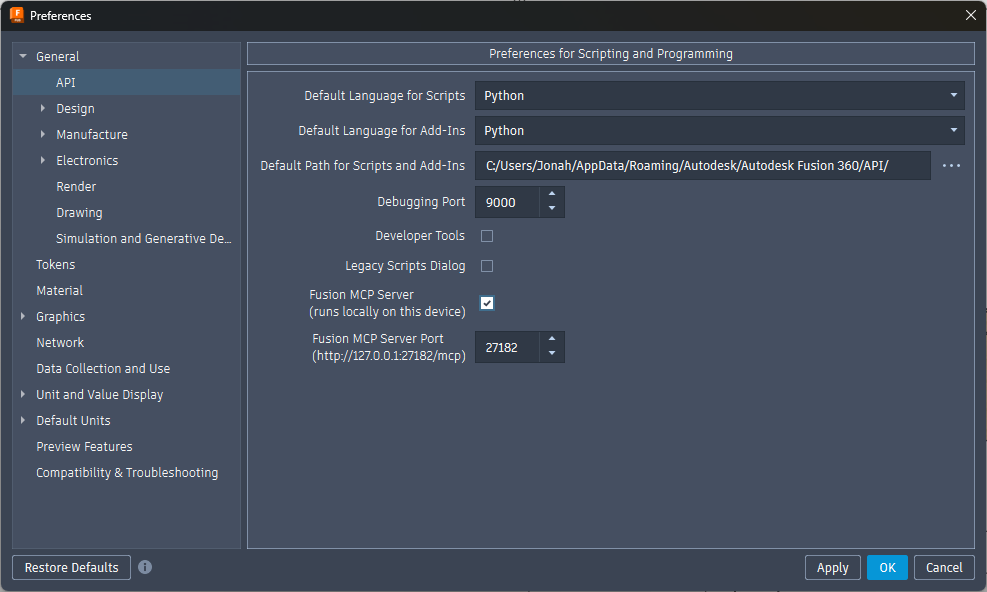
I first connected the Fusion 360 MCP Server to Claude Code and provided it with a prompt to build the gear. I set up the MCP integration as shown in my Fusion preferences.
This approach did not yield good results. Instead, it consumed all my token limits for the day attempting to figure out the complex API interactions.
2. Approach 2: Autodesk Assistant
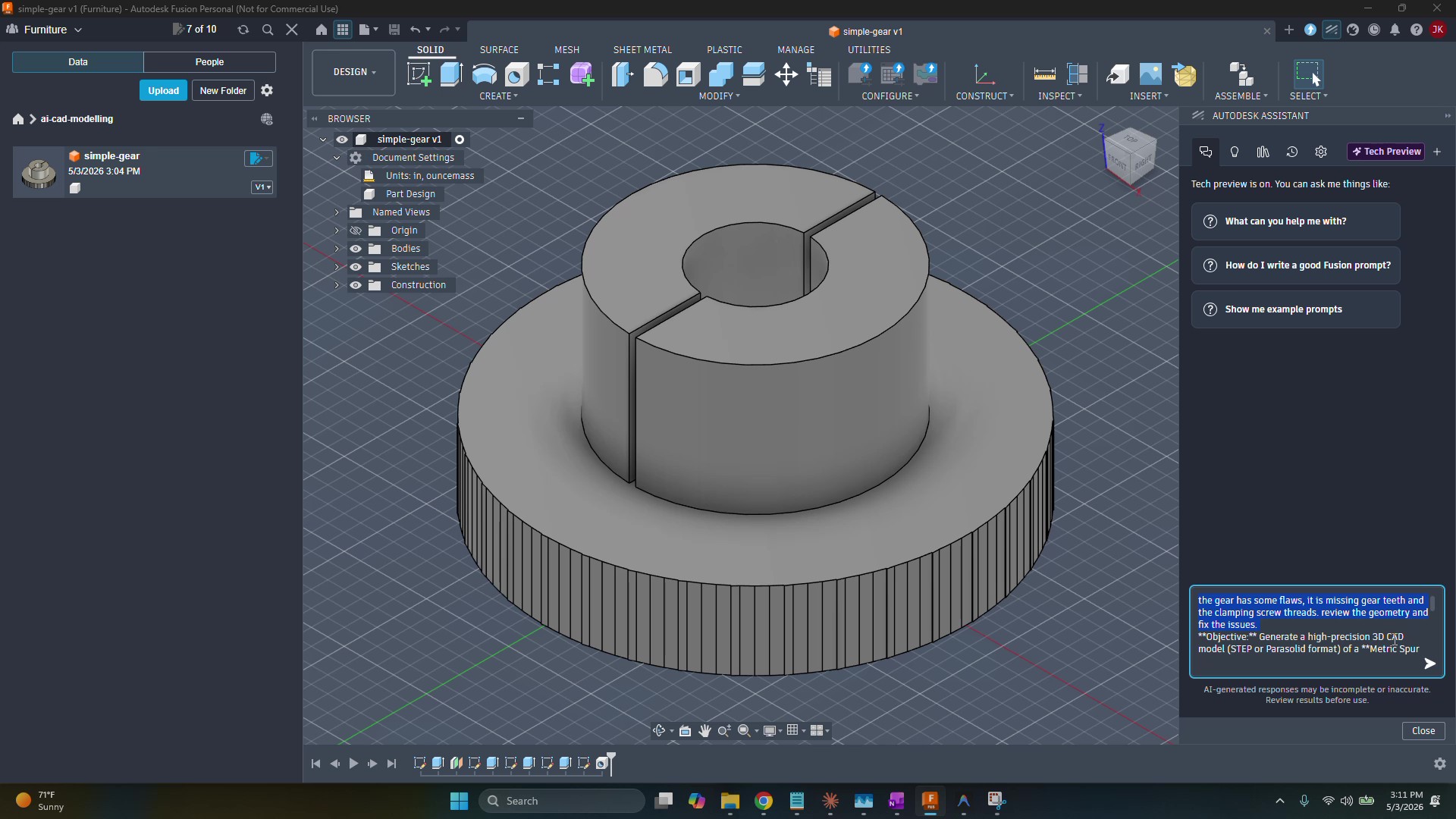
Then I attempted the second approach where I used the built-in Autodesk Assistant. I provided Autodesk Assistant the prompt; it did a better job but initially, it missed the gear teeth completely, generating just a blank cylindrical body.
3. The Final Outcome
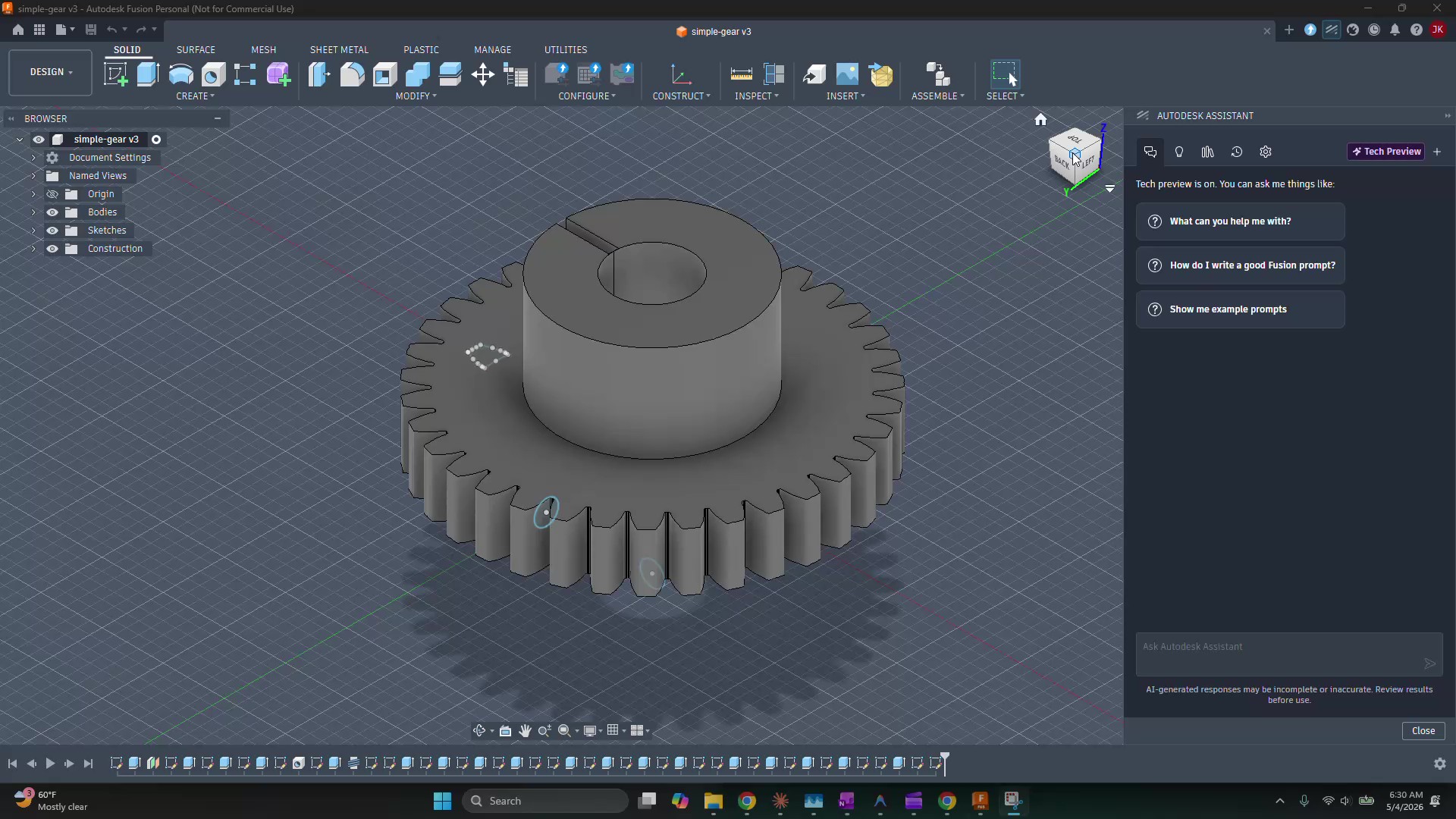
After a couple of attempts and refinements to the prompt, the Autodesk Assistant was finally able to generate the proper geometry for the gear teeth.
Looking Forward
While the initial AI agents (like Claude via MCP) struggled to successfully build the gears I set out to create, the built-in capability of the Autodesk Assistant eventually succeeded. The agents were able to interface deeply with a complex engineering API and troubleshoot syntax errors.
The current hurdles are primarily related to edge cases in computational geometry and token limits. Given the accelerating rate of evolution of AI tools, it is practically guaranteed that within a year, AI agents will be able to construct high-fidelity, production-ready 3D models and entire assemblies completely autonomously on the first try.